








Equine Law & Business Letter
Articles
Spring 2025
A summary of legislation and rulings from April–June, 2025.
USEF expelled a trainer whose conduct the Hearing Committee found “contributed to the unintentional death” of a show horse in her care, custody, and control.
Passage of equine activity liability acts gained momentum in the 1990’s.
48 STATES HAVE SOME FORM OF EQUINE ACTIVITY LAW limiting the liability of equine activity sponsors for accidents resulting from risks inherent to the sport.
The Current List:
Alabama, Alaska, Arizona, Arkansas, Colorado, Connecticut, Delaware, Florida, Georgia, Hawaii, Idaho, Illinois, Indiana, Iowa, Kansas, Kentucky, Louisiana, Maine, Massachusetts, Michigan, Minnesota, Mississippi, Missouri, Montana, Nebraska, Nevada, New Hampshire, New Jersey, New Mexico, New York, North Carolina, North Dakota, Ohio, Oklahoma, Oregon, Pennsylvania, Rhode Island, South Carolina, South Dakota, Tennessee, Texas, Utah, Vermont, Virginia, Washington, West Virginia, Wisconsin, Wyoming.
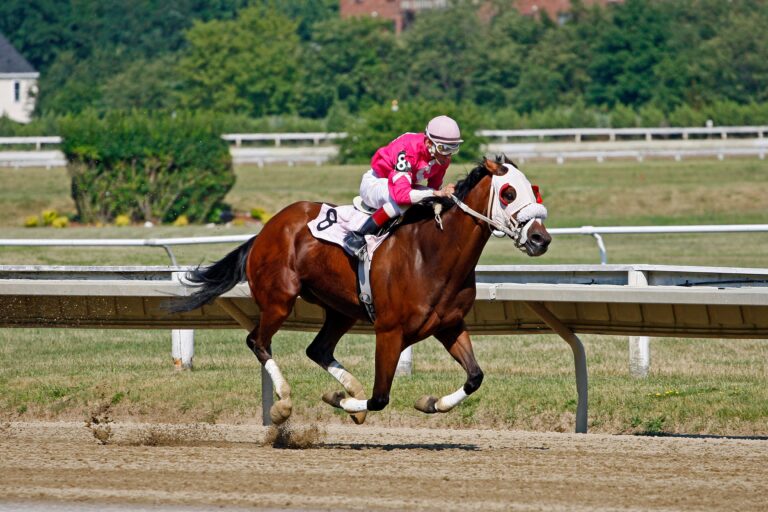
A racetrack veterinarian has been banned from racing after the Horseracing Integrity and Safety Authority (HISA) and the Horseracing Integrity & Welfare Unit (HIWU) pursued cases against him and 13 trainers in connection with what HISA called a “conspiracy” to “evade HISA rules designed to protect and enhance the health and safety of horses and riders.”
The United States Attorney’s Office for the Southern District of New York is pursuing criminal charges against the executive of a drug-compounding company over what it alleges to be an unlawful conspiracy between them and a number of equine veterinarians.
Specifically, the indictment accuses the executive “with participating in a conspiracy to distribute an adulterated or misbranded equine drug with intent to defraud and mislead in violation of [federal law]”
The USEF Board recently approved position statements for the organization on Equine Overuse and on Equine Safety and Welfare.
The Equine Safety and Welfare statement emphasizes US Equestrian’s commitment to ensuring horses are fit to compete, maintaining optimal conditions for equine welfare, increasing uniformity, integrity and clarity through oversight, providing lifetime care for horses, and sharing information that enhances safety for every horse, every day.
The FEI Tribunal has issued a Consent Award in an equine anti-doping case involving a Banned Substance.
In this case, the horse Hadar du Vallois (FEI ID 108TS04/KSA), ridden by Abdullah H N H Al Deehani (10042945/KUW), tested positive for the Banned Substance Nandrolone, following samples taken at the CEI1*100 – Al Ula (KSA) 8 – 9 November 2024.
In keeping with its ongoing commitment to equine welfare, US Equestrian advanced a number of rule changes and modifications at its mid-year meeting June 16 and 17 in Lexington, Ky. Directors heard updates on the organization’s strategic plan, the path to the 2028 Olympic Games in Los Angeles, as well as its vision of continual enhancements to the welfare and integrity of equine sport.
The United States Equestrian Federation (“USEF”) recently published more than a dozen notices of disciplinary actions taken against members for a variety of rule violations.
In three horse welfare/sportsmanship cases, one member was suspended for a month for overworking a horse at a competition, a second member was suspended for a month for overusing a whip on a horse, and then tying it up as punishment, and a third member was censured for kicking her horse in its front leg.
The United States Equestrian Federation (“USEF”) recently imposed a seven month suspension on a trainer in what it called a case of “intentional doping,” after a horse the trainer exhibited tested positive for the presence of two sedating medications (and their metabolites) known as acepromazine and detomidine.
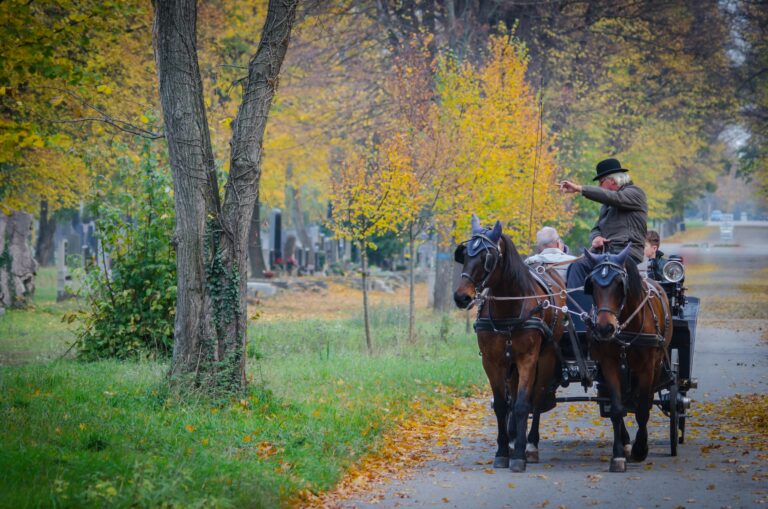
Controversy around the carriage horse industry in Charleston, South Carolina became heated when animal rights advocates used social media to disseminate video of carriage horses falling to the ground during a carriage tour in 2017. In response, Charleston Carriage Works, LLC filed suit against the Charleston Animal Society and Charleston Carriage Horse Advocates (and its president) alleging the information they had posted on the internet gave rise to claims for defamation, civil conspiracy, intentional interference with business relations and civil rights violations.
The United States Equestrian Federation (“USEF”) has expelled a member for violating the USEF Code of Conduct after a Texas court found her guilty of felony animal cruelty to a mare to whom the veterinarian was providing post-surgical care.
According to the Hearing Committee’s decision, the member’s license to practice veterinary medicine was revoked as the result of an incident in which the veterinarian was alleged to have used a “hotshot” or handheld cattle prod to repeatedly shock the mare in an effort to get her to stand. As a result of the criminal charges on which she was convicted, the veterinarian will serve a term of probation, but not any jail time.
The Supreme Court of New Mexico has ruled that a trainer, who was disciplined after a verbal altercation with a steward, may have no legal recourse against the New Mexico Racing Commission (“NMRC”).
According to the Court, the trainer held a license issued by the NMRC and wanted to hire an assistant trainer whose license had been revoked. The trainer intervened on his prospective employee’s behalf, but when his efforts proved unfruitful he got into a heated argument with one of the NMRC racing stewards. As a result, the NMRC initiated an administrative disciplinary action against the trainer, found that he had violated a rule of racing governing integrity and decorum, and fined him $500.
The United States Tax Court recently sustained the IRS’s disallowance of loss deductions a Louisiana couple claimed were attributable to their Arabian horse activities. The IRS had audited the couple for the years 2004-2009 and determined that they were not engaged in their Arabian horse activity with the requisite profit motive to be entitled to the business loss deductions they claimed. The IRS determined deficiencies in the couple’s federal income tax payments totaling around $100,000.
A racing enthusiast sued his trainer for failing to claim a racehorse he wanted. The case went to trial in a Maryland state court with the trainer emerging victorious on all counts. The trial court’s ruling was affirmed on appeal.
According to the appellate court’s decision,
A South Carolina appellate court affirmed a trial court’s resolution of an insurance coverage dispute in favor of an insurance company that declined to offer underinsured motorist (UIM) coverage on an insured’s camper and horse trailer.
The trial court had granted the insurance company
Montana recently enacted revisions to its equine activity liability act, providing for waivers of liability for participants in equine activities, and requiring waivers to include very specific language in order to be enforceable.
Two Massachusetts-based harness-racing trainers sued the Harness Horsemen’s Association of New England, Inc. (“HHANE”), after their membership applications were rejected because they had crossed out language on the application form.
The trainers had been members of HHANE for many years and previously served on its board. Over time, the trainers became dissatisfied with the organization and its contract negotiations with a local harness racing track operator.
A recent ruling from the Court of Appeals of New York has dramatically changed the New York law of negligence liability for harm caused by domestic animals.
A 2006 case in New York held that there can be no common-law negligence liability when a domestic animal causes harm. That case significantly changed the landscape of animal liability law in New York by eliminating common law negligence claims